
Two of the most popular selection tools inside the One Stop Racing members’ area are the Consensus Method and the 40+ Method. Both are built entirely from our One Stop Ratings, both are published every single day, and both have a simple, mechanical rule you can follow without any subjective judgement. In this post we explain exactly how each one works, then we put them together and show what the numbers say about using them side by side.
How the Consensus Method works
One Stop Ratings don’t produce a single number in isolation – every horse is rated across four separate figures:
- OSR – the overall One Stop Rating
- LR – the Last Run figure
- HS – the Highest Speed figure
- SR – the Standard (consistency) figure
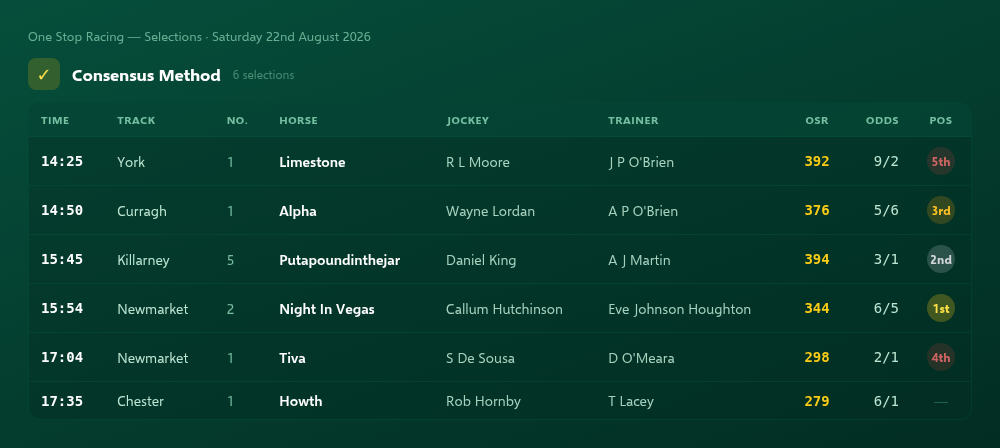
The Consensus Method looks for the races where all four of those figures agree. A horse only qualifies when it is the outright top-rated runner on every one of the four figures – top on OSR and top on LR and top on HS and top on SR, with no other horse sharing top spot on any of them. When the four independent measures all point at the same horse, that is about as strong a signal of superiority as the ratings can give.
One extra filter keeps the quality high: at least 80% of the runners in the race must have had a previous run. This removes maiden and novice events packed with unexposed debutants, where the ratings simply don’t have enough evidence to trust.
How the 40+ Method works
Where the Consensus Method is about agreement, the 40+ Method is about daylight. It focuses on the headline OSR figure and looks for horses that tower over their rivals.
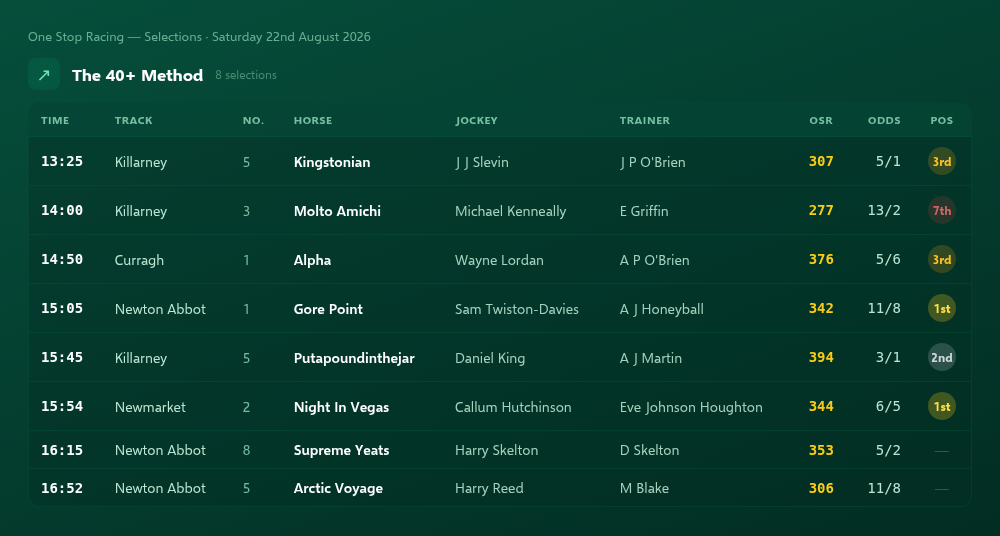
A horse qualifies for the 40+ Method when it is the sole clear top-rated runner on OSR and its rating is at least 40 points higher than the next best horse in the race. A 40-point gap on the One Stop Ratings scale is significant – it means the market and the form book have, on the ratings’ reading, seriously underestimated the gulf in class. The same 80%-had-a-previous-run filter applies, so again you are only ever betting into races with a solid body of evidence behind them.
Putting the two together
Because the two methods measure different things, they often flag different horses – but sometimes they land on the same horse. When a runner is both the unanimous four-figure leader and 40+ points clear on OSR, you have two independent systems shouting about the same selection. That overlap is where things get interesting.
To test it properly we backtracked every daily card where starting prices were stored (10 August to 28 September 2026), settled every qualifier to a £1 level stake at the returned SP, and treated any late non-runner as a void bet. Here is how the methods performed once the results are split by race type.
Non‑handicaps
| View | Bets | Wins | Strike | P/L | ROI |
|---|---|---|---|---|---|
| Consensus Method | 65 | 29 | 44.6% | +£6.33 | +9.7% |
| 40+ Method | 62 | 34 | 54.8% | +£7.37 | +11.9% |
| Combined (either method) | 107 | 53 | 49.5% | +£6.95 | +6.5% |
| Qualified for BOTH | 20 | 10 | 50.0% | +£6.75 | +33.8% |
Handicaps
| View | Bets | Wins | Strike | P/L | ROI |
|---|---|---|---|---|---|
| Consensus Method | 65 | 15 | 23.1% | −£18.64 | −28.7% |
| 40+ Method | 95 | 25 | 26.3% | −£33.08 | −34.8% |
| Combined (either method) | 140 | 37 | 26.4% | −£36.35 | −26.0% |
| Qualified for BOTH | 20 | 3 | 15.0% | −£15.37 | −76.8% |
What the numbers tell us
The split is striking. In non‑handicaps both methods make a profit on their own, and the horses that qualify for both methods at once are the standout group of the whole study – a 50% strike rate and a +33.8% return. Two independent ratings signals agreeing genuinely does point to a stronger bet.
In handicaps the picture flips completely. Every view loses, and the "qualified for both" group is actually the worst performer at −76.8%. That makes sense: handicaps are specifically designed to drag every runner back to a level mark, so a horse that towers over the field on ratings is usually either well caught by the handicapper or heavily over‑bet by the market – often both.
The conclusion
Combining the Consensus Method and the 40+ Method works best when you concentrate on non‑handicaps. Treat a horse that qualifies for both methods in a non‑handicap as a genuine highlight of the day – that overlap produced the best return of anything we tested. In handicaps, both methods and their overlap consistently lost, so they are far better avoided there. One straightforward, disciplined approach: follow the methods on non‑handicap races and leave the handicaps alone.
Backtest basis: £1 level stakes settled at the recorded starting price, across every card with stored prices from 10 August to 28 September 2026. Late non‑runners treated as void. Sample sizes for the "both" groups are small (20 bets each), so treat those figures as indicative rather than guaranteed – but the direction of travel between non‑handicaps and handicaps is consistent across every method.
Which memberships include the methods?
The Consensus Method and the 40+ Method (along with our Possible Lays table) are included with the following One Stop Racing memberships:
- Sapphire Membership – Horse Racing Tips: sign up here
- Ruby Membership – Horse Racing Ratings: sign up here
- Diamond Membership – Full Membership: sign up here
Not sure which tier is right for you? Compare everything on our membership options page and start getting the Consensus Method and 40+ Method selections delivered every single day.